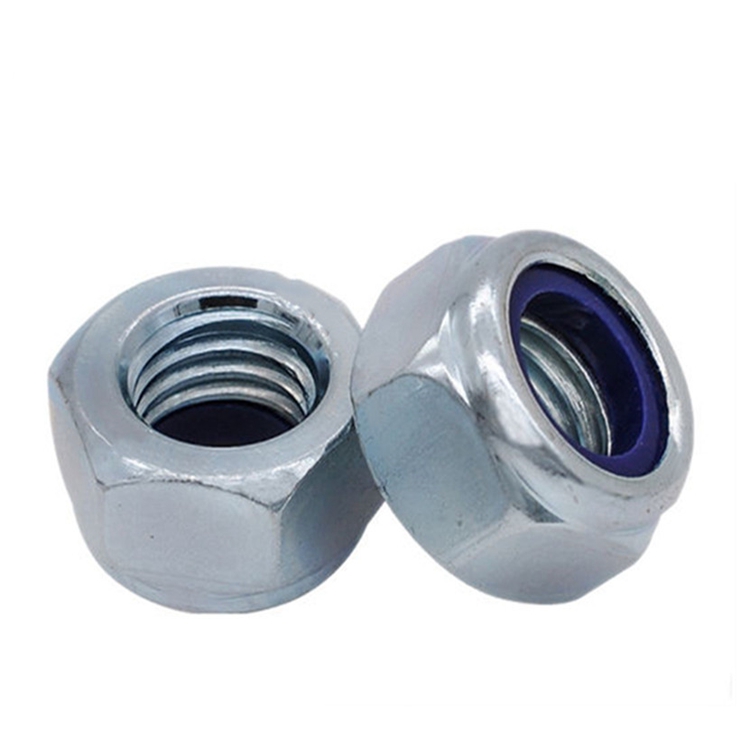
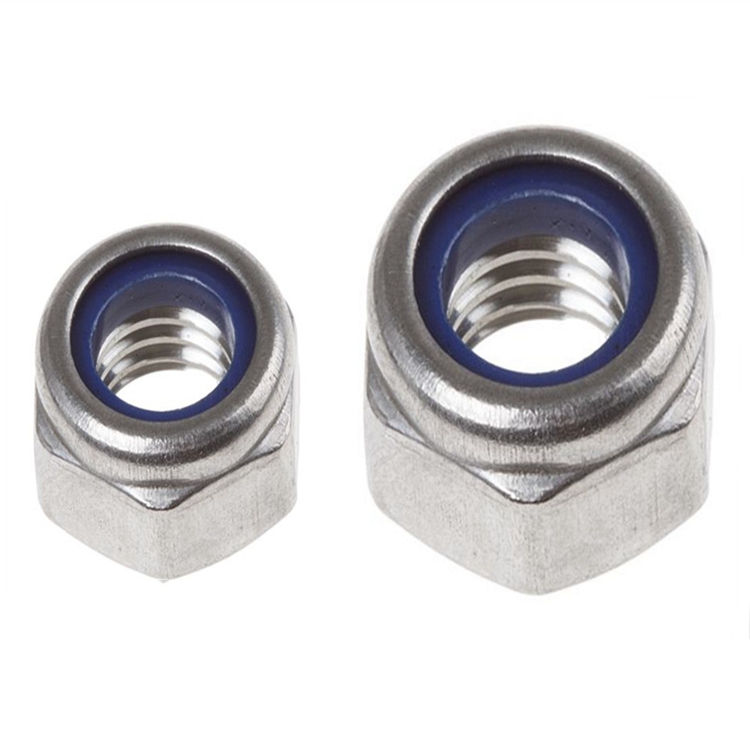
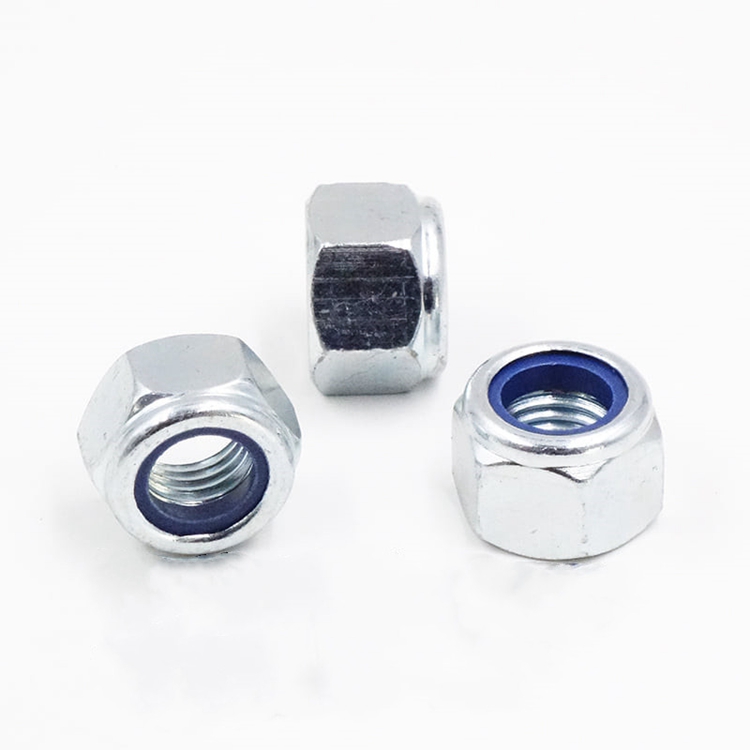
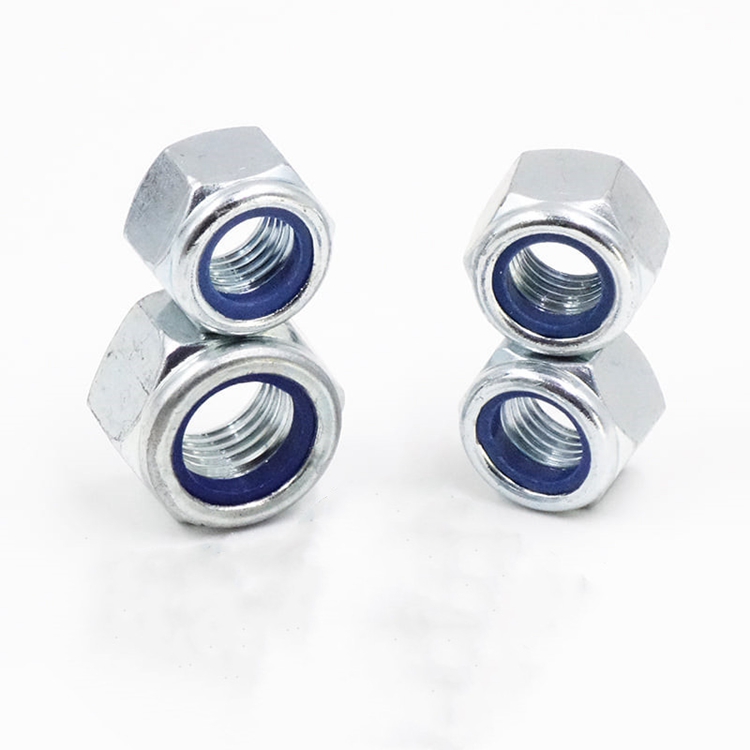
LOCK NUTS
Metric lock nuts provide a non-permanent locking action. Prevailing torque lock nuts work by thread deformation and must be wrenched on and off; they are not chemical or temperature limited like nylon insert lock nuts, but reuse is still limited.
Metric lock nuts provide a non-permanent locking action. Prevailing torque lock nuts work by thread deformation and must be wrenched on and off; they are not chemical or temperature limited like nylon insert lock nuts, but reuse is still limited.
Product Introduction
Metric lock nuts feature a non-permanent “locking” action. Prevailing torque lock nuts achieve locking through thread deformation and must be tightened and loosened with a wrench; they are not chemically and temperature limited like nylon insert lock nuts. However, reuse is still limited. K-Lock nuts are free-spinning and reusable. Reuse of nylon insert lock nuts is limited, and the captive nylon insert may be damaged by certain chemicals and temperature extremes; wrenching the nut on and off is also required. Zinc-plated steel nuts up to Class 10 and stainless steel nuts with coarse and fine machine screw threads can be supplied.
Secure metric bolts exposed to vibration, wear, and temperature changes. These metric lock nuts use a nylon insert that grips the bolt without damaging the thread. They feature fine-pitch threads, which are closer together than coarse-pitch threads and therefore less likely to loosen due to vibration. Fine and coarse threads are not compatible. These lock nuts are reusable, but they lose holding power with each use.
Applications
Lock nuts can be used in many applications, including fastening wood, steel, and other construction materials, for projects such as docks, bridges, highway structures, and buildings.
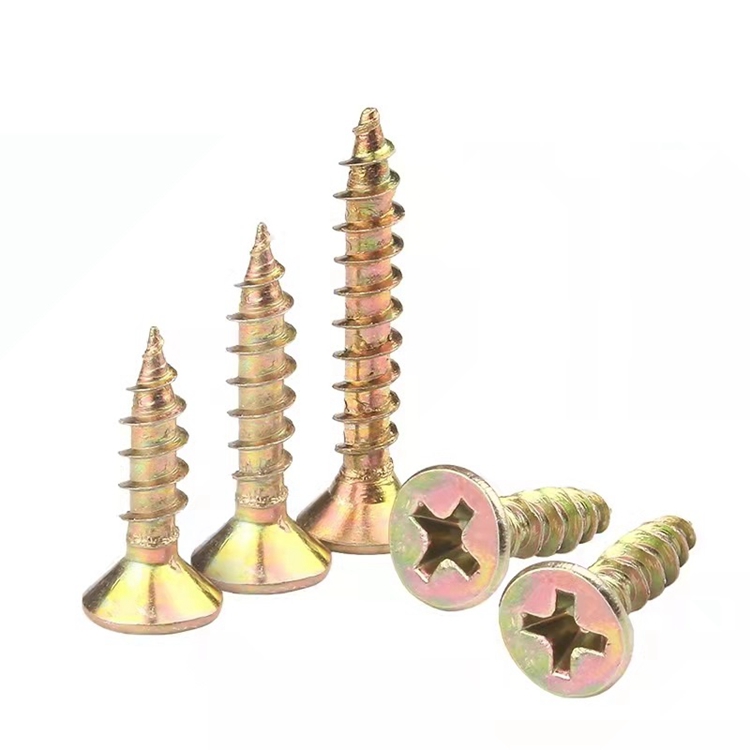
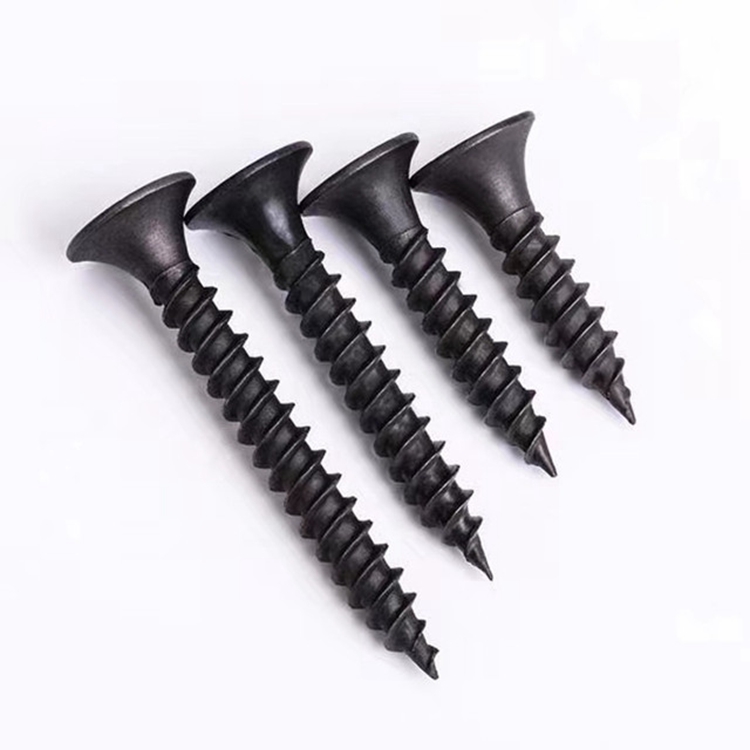
Black-oxide steel screws offer mild corrosion resistance in dry environments. Zinc-plated steel screws provide corrosion resistance in wet environments. Black, ultra-corrosion-resistant coated steel screws resist chemicals and withstand 1,000 hours of salt spray. Coarse threads are the industry standard—choose these hex nuts if you are unsure of the threads per inch. Fine and extra-fine threads are closely spaced to help prevent loosening from vibration; the finer the thread, the greater the resistance.
The lock nuts are designed to fit ratchet or spanner torque wrenches, enabling you to tighten to your exact specifications. Grade 2 bolts are commonly used in construction for joining wood components. Grade 4.8 bolts are used in small engines. Grade 8.8, 10.9, or 12.9 bolts provide high tensile strength. One advantage nuts and fasteners have over welds or rivets is that they enable straightforward disassembly for repairs and maintenance.
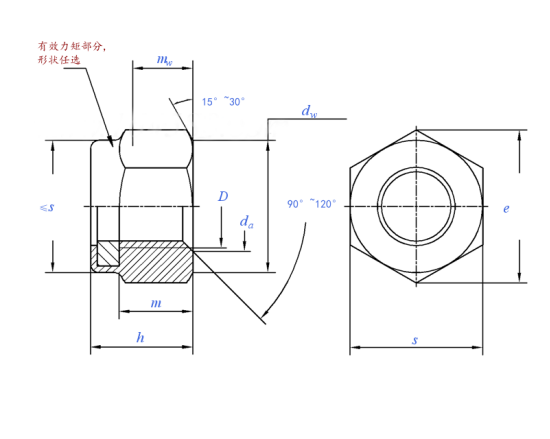
|
Thread specifications |
M5 |
M6 |
M8 |
M10 |
M12 |
(M14) |
M16 |
M20 |
M24 |
M30 |
M36 |
|
|
D |
||||||||||||
|
P |
pitch |
0.8 |
1 |
1.25 |
1.5 |
1.75 |
2 |
2 |
2.5 |
3 |
3.5 |
4 |
|
da |
Maximum value |
5.75 |
6.75 |
8.75 |
10.8 |
13 |
13 |
15.1 |
17.3 |
21.6 |
25.9 |
32.4 |
|
Minimum value |
5 |
6 |
8 |
10 |
12 |
14 |
16 |
20 |
24 |
30 |
36 |
|
|
dw |
Minimum value |
6.88 |
8.88 |
11.63 |
14.63 |
16.63 |
19.64 |
22.49 |
27.7 |
33.25 |
42.75 |
51.11 |
|
e |
Minimum value |
8.79 |
11.05 |
14.38 |
17.77 |
20.03 |
23.36 |
26.75 |
32.95 |
39.55 |
50.85 |
60.79 |
|
h |
Maximum value |
7.2 |
8.5 |
10.2 |
12.8 |
16.1 |
18.3 |
20.7 |
25.1 |
29.5 |
35.6 |
42.6 |
|
Minimum value |
6.62 |
7.92 |
9.5 |
12.1 |
15.4 |
17 |
19.4 |
23 |
27.4 |
33.1 |
40.1 |
|
|
m |
Minimum value |
4.8 |
5.4 |
7.14 |
8.94 |
11.57 |
13.4 |
15.7 |
19 |
22.6 |
27.3 |
33.1 |
|
mw |
Minimum value |
3.84 |
4.32 |
5.71 |
7.15 |
7.15 |
9.26 |
10.7 |
12.6 |
15.2 |
18.1 |
21.8 |
|
s |
Maximum value |
8 |
10 |
13 |
16 |
18 |
21 |
24 |
30 |
36 |
46 |
55 |
|
Minimum value |
7.78 |
9.78 |
12.73 |
15.73 |
17.73 |
20.67 |
23.67 |
29.16 |
35 |
45 |
53.8 |
|
|
Thousand-piece weight (Steel) ≈ kg |
1.54 |
2.94 |
6.1 |
11.64 |
17.92 |
27.37 |
40.96 |
73.17 |
125.5 |
256.6 |
441 |
|