
SPRING WASHERS
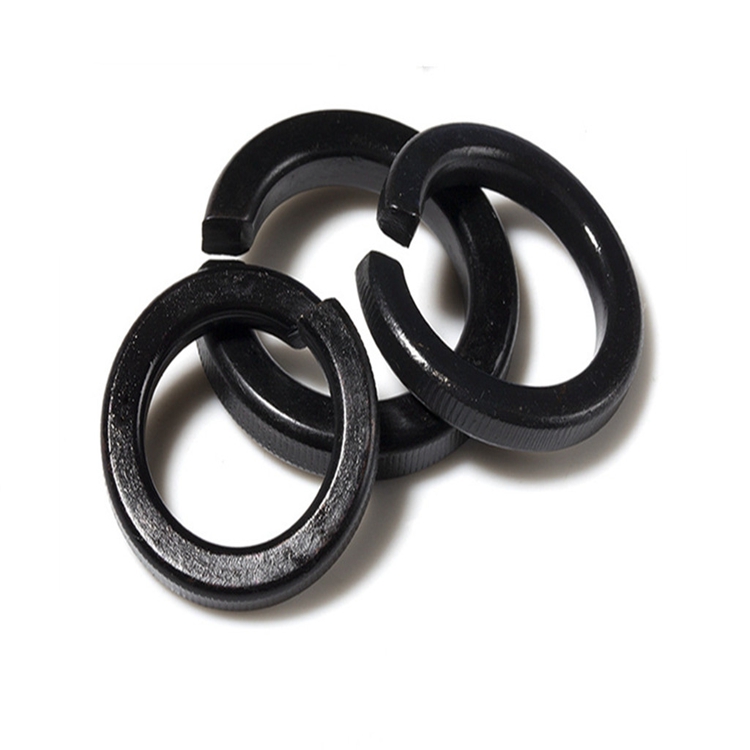
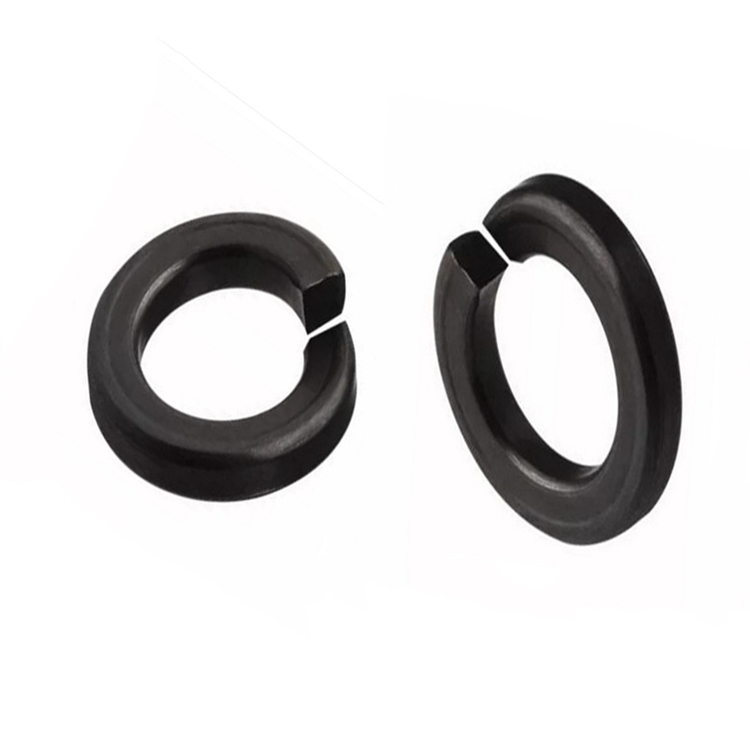
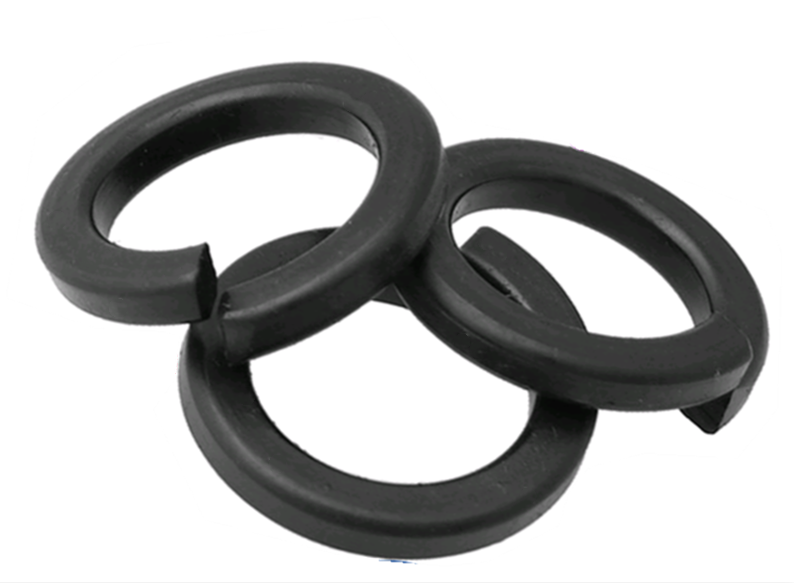
A split ring bent into a helical shape at one point. This design enables the washer to apply a spring force between the fastener head and the substrate.
A split ring bent into a helical shape at one point. This design enables the washer to apply a spring force between the fastener head and the substrate.
Product Introduction
A split ring is formed and bent into a helical shape. This design enables the washer to generate a spring force between the fastener head and the substrate, holding the washer firmly against the substrate and pressing the bolt thread firmly against the nut or substrate thread. The result is increased friction and resistance to rotation. Applicable standards include ASME B18.21.1, DIN 127 B, and United States Military Standard NASM 35338 (formerly MS 35338 and AN-935).
Spring washers feature a left-hand helix and therefore permit tightening only in a right-hand direction (i.e. clockwise). If a left-hand turning motion is applied, the raised edge bites into the underside of the bolt or nut and into the component being fastened. This action resists rotation. For this reason, spring washers are ineffective on left-hand threads and hardened surfaces. In addition, they must not be used together with a flat washer beneath the spring washer, as this prevents the spring washer from biting into the component that provides the resistance to rotation.
The key benefit of spring lock washers is their trapezoidal washer geometry. When compressed to loads near the bolt’s proof strength, the washer twists and flattens. This reduces the spring rate of the bolted joint, enabling it to maintain more clamping force under the same vibration levels, thereby helping prevent loosening.
Applications
The spring washer prevents nuts and bolts from turning, slipping, and working loose due to vibration and torque. Different spring washer designs achieve this function in slightly different ways, but the underlying principle is the same: to hold the nut and bolt in position. Some spring washers accomplish this by biting into the base material (bolt) and the nut with their ends.
Spring washers are commonly used in applications subject to vibration and potential fastener slippage. Industries that frequently use spring washers include transportation-related sectors (automotive, aircraft, and marine). They may also be used in household appliances such as air handlers and clothes washers (washing machines).
|
Nominal diameter |
2 |
2.5 |
3 |
4 |
5 |
6 |
8 |
10 |
12 |
(14) |
|
|
d |
Least value |
2.1 |
2.6 |
3.1 |
4.1 |
5.1 |
6.2 |
8.2 |
10.2 |
12.3 |
14.3 |
|
Crest value |
2.3 |
2.8 |
3.3 |
4.4 |
5.4 |
6.7 |
8.7 |
10.7 |
12.8 |
14.9 |
|
|
h |
Nominal |
0.6 |
0.8 |
1 |
1.2 |
1.6 |
2 |
2.5 |
3 |
3.5 |
4 |
|
Least value |
0.52 |
0.7 |
0.9 |
1.1 |
1.5 |
1.9 |
2.35 |
2.85 |
3.3 |
3.8 |
|
|
Crest value |
0.68 |
0.9 |
1.1 |
1.3 |
1.7 |
2.1 |
2.65 |
3.15 |
3.7 |
4.2 |
|
|
n |
Least value |
0.52 |
0.7 |
0.9 |
1.1 |
1.5 |
1.9 |
2.35 |
2.85 |
3.3 |
3.8 |
|
Crest value |
0.68 |
0.9 |
1.1 |
1.3 |
1.7 |
2.1 |
2.65 |
3.15 |
3.7 |
4.2 |
|
|
H |
Least value |
1.2 |
1.6 |
2 |
2.4 |
3.2 |
4 |
5 |
6 |
7 |
8 |
|
Crest value |
1.5 |
2.1 |
2.6 |
3 |
4 |
5 |
6.5 |
8 |
9 |
10.5 |
|
|
Weight of one thousand pieces (steel) kg |
0.023 |
0.053 |
0.097 |
0.182 |
0.406 |
0.745 |
1.53 |
2.82 |
4.63 |
6.85 |
|
|
Nominal diameter |
16 |
(18) |
20 |
(22) |
24 |
(27) |
30 |
36 |
42 |
48 |
|
|
d |
Least value |
16.3 |
18.3 |
20.5 |
22.5 |
24.5 |
27.5 |
30.5 |
36.6 |
42.6 |
49 |
|
Crest value |
16.9 |
19.1 |
21.3 |
23.3 |
25.5 |
28.5 |
31.5 |
37.8 |
43.8 |
50.2 |
|
|
h |
Nominal |
4 |
4.5 |
5 |
5 |
6 |
6 |
6.5 |
7 |
8 |
9 |
|
Least value |
3.8 |
4.3 |
4.8 |
4.8 |
5.8 |
5.8 |
6.2 |
6.7 |
7.7 |
8.7 |
|
|
Crest value |
4.2 |
4.7 |
5.2 |
5.2 |
6.2 |
6.2 |
6.8 |
7.3 |
8.3 |
9.3 |
|
|
n |
Least value |
3.8 |
4.3 |
4.8 |
4.8 |
5.8 |
5.8 |
6.2 |
6.7 |
7.7 |
8.7 |
|
Crest value |
4.2 |
4.7 |
5.2 |
5.2 |
6.2 |
6.2 |
6.8 |
7.3 |
8.3 |
9.3 |
|
|
H |
Least value |
8 |
9 |
10 |
10 |
12 |
12 |
13 |
14 |
16 |
18 |
|
Crest value |
10.5 |
11.5 |
13 |
13 |
15 |
15 |
17 |
18 |
21 |
23 |
|
|
Weight of one thousand pieces (steel) kg |
7.75 |
11 |
15.2 |
16.5 |
26.2 |
28.2 |
37.6 |
51.8 |
78.7 |
114 |
|