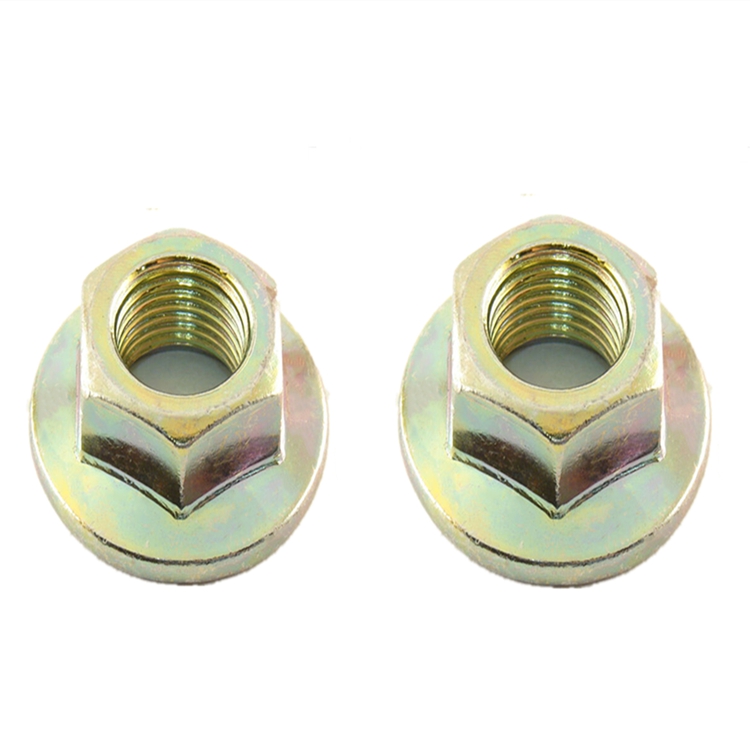
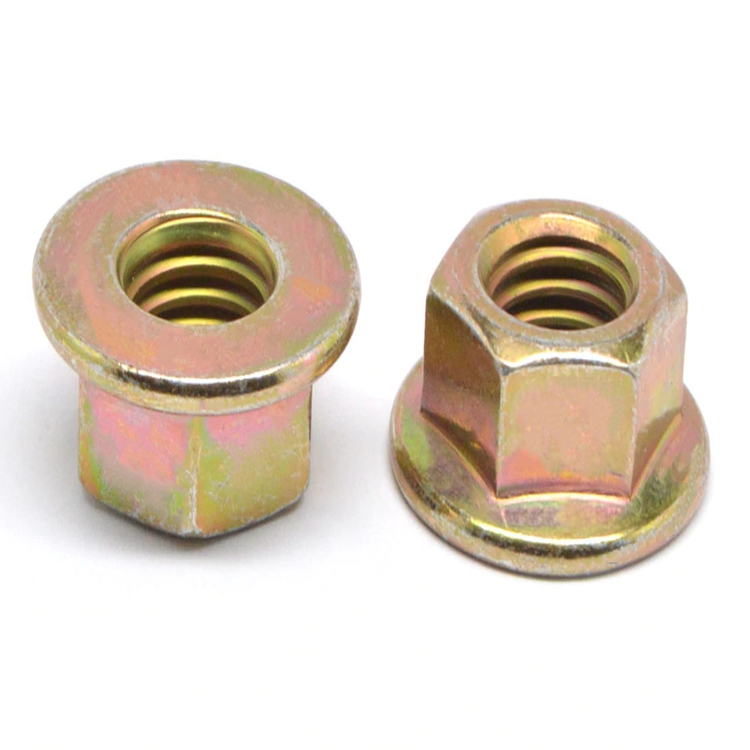
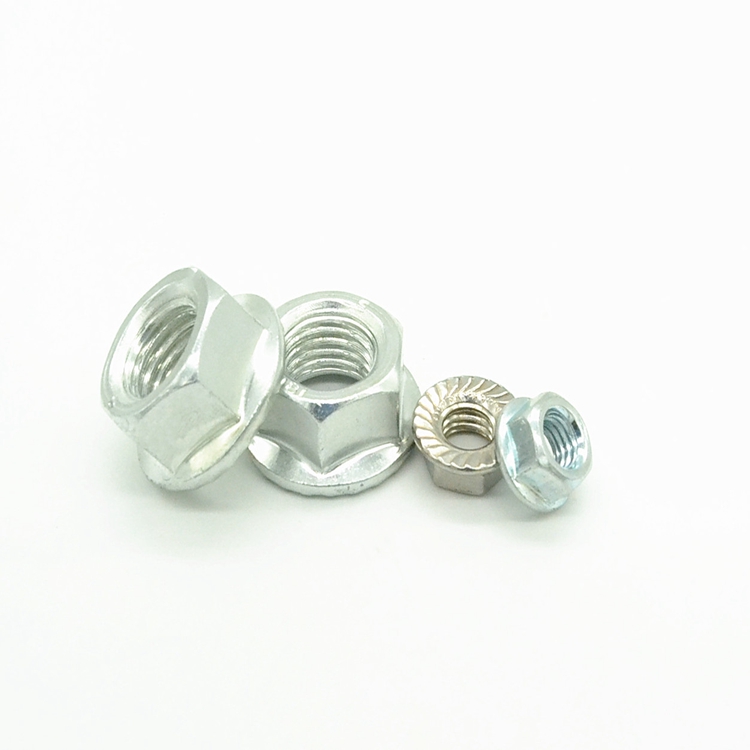
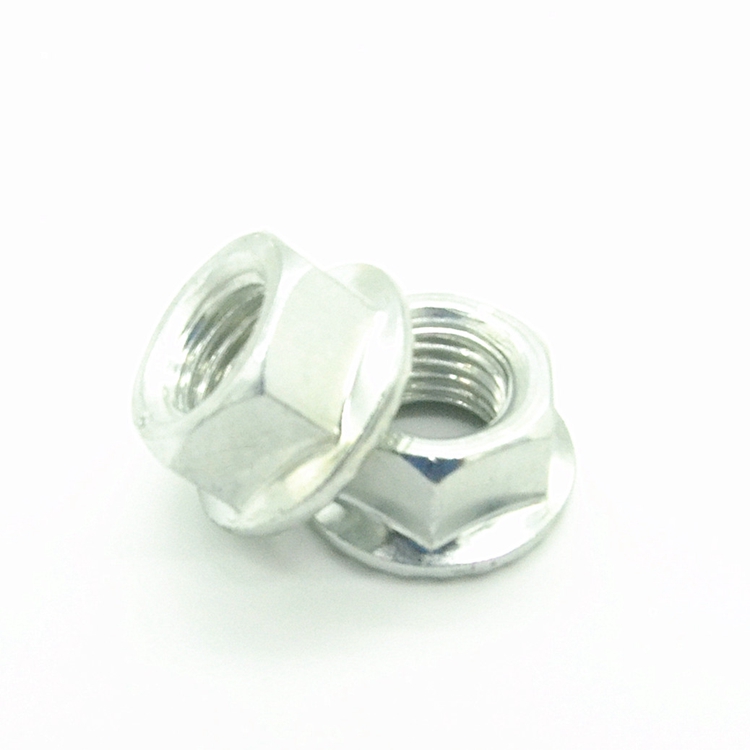
FLANGE NUTS
Flange nuts are among the most common nuts and are used with anchors, bolts, screws, studs, threaded rods, and any other fastener with machine screw threads. They have a flange underside for secure bearing. Metric flange nuts resemble and are commonly used with flange bolts.
Flange nuts are among the most common nuts and are used with anchors, bolts, screws, studs, threaded rods, and any other fastener with machine screw threads. They have a flange underside for secure bearing. Metric flange nuts resemble and are commonly used with flange bolts.
Product Introduction
Flange nuts are among the most common types of nuts. They are used with anchors, bolts, screws, studs, threaded rods, and any other fasteners that use machine screw threads. “Flange” means the nut has an integral flange at the underside. Metric flange nuts closely resemble and are commonly used with flange bolts. The flange flares out to a diameter larger than the hex section, and the machine screw thread may be coarse or fine. The bearing surface can be smooth or serrated. Use a serrated bearing surface to help resist loosening. Steel strength grades include Class 8 and 10, available with a plain or zinc-plated finish.
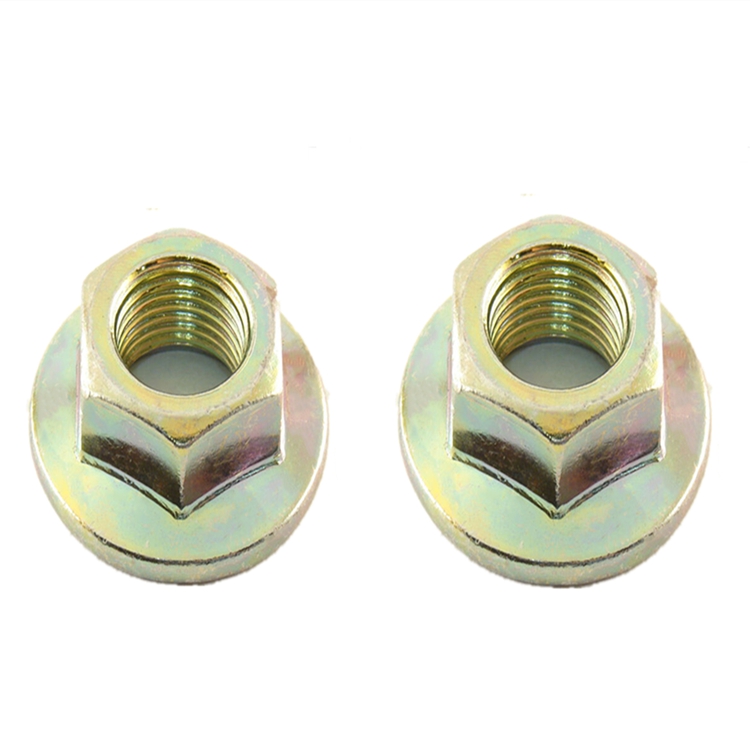
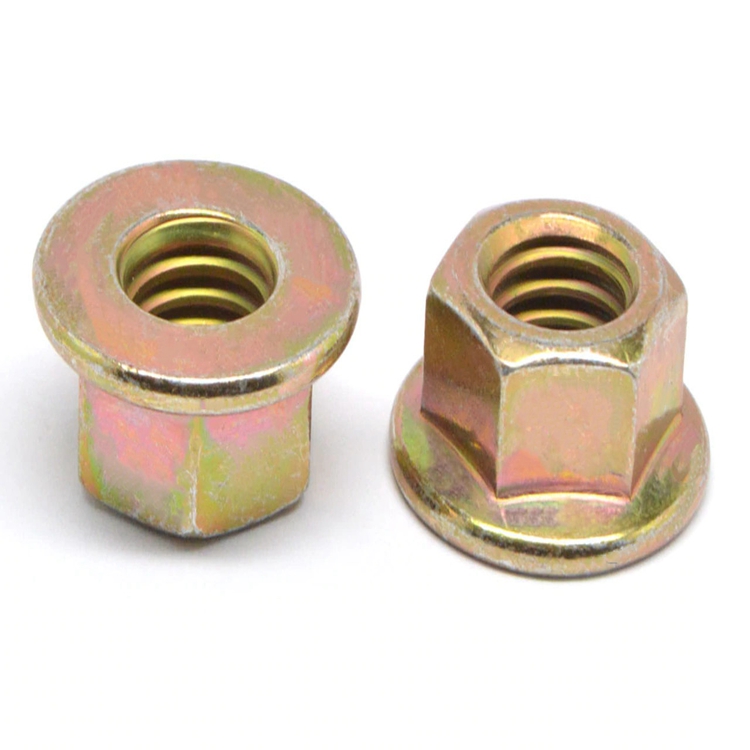
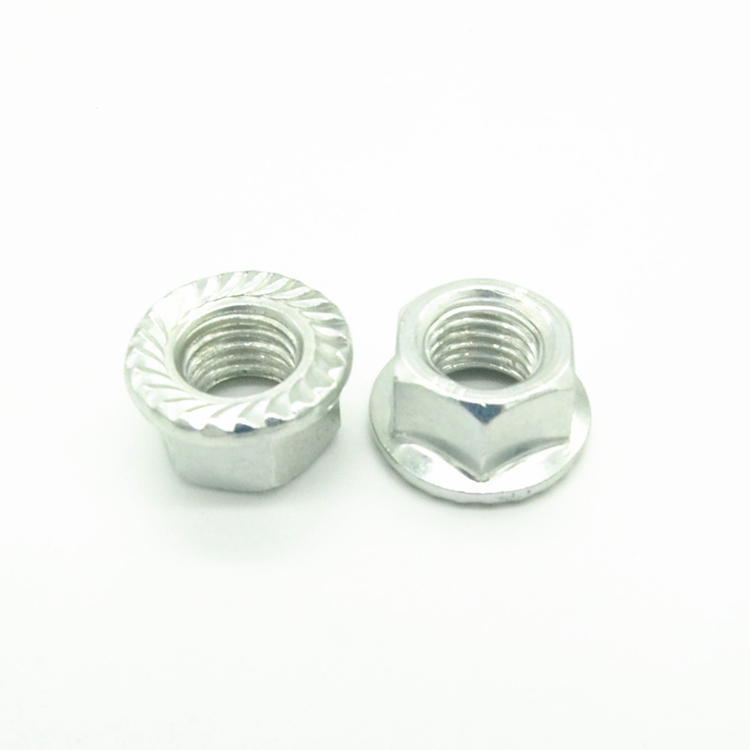
To ensure full thread engagement with flange nuts, bolts/screws should be long enough to allow at least two full threads to extend beyond the nut face after tightening. Conversely, there should be two full threads exposed on the head side of the nut to ensure proper tightening.
Applications
Flange nuts can be used in a wide range of applications, including fastening wood, steel, and other construction materials. They are suitable for projects such as docks, bridges, highway structures, and buildings.
Black-oxide steel screws provide mild corrosion resistance in dry environments. Zinc-plated steel screws help resist corrosion in wet environments. Black ultra-corrosion-resistant-coated steel screws resist chemicals and withstand 1,000 hours of salt spray. Coarse threads are the industry standard. If you do not know the threads per inch, choose these hex nuts. Fine and extra-fine threads are more closely spaced to help prevent loosening from vibration; the finer the thread, the better the resistance.
Flange nuts are designed to fit ratchet or spanner torque wrenches, enabling you to tighten the nuts to your required specifications. Grade 2 bolts are commonly used in construction for joining wood components. Grade 4.8 bolts are used in small engines. Grade 8.8, 10.9, or 12.9 bolts offer high tensile strength. One advantage that nuts and fasteners provide over welds or rivets is that they enable easy disassembly for repairs and maintenance.
|
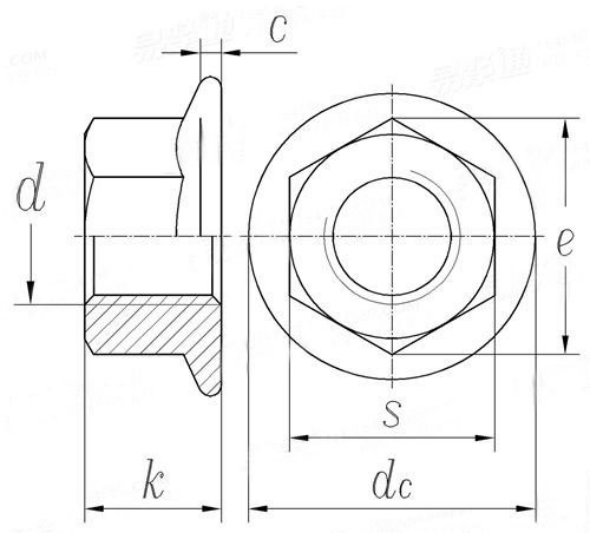
Thread specifications d |
M5 |
M6 |
M8 |
M10 |
M12 |
M14 |
M16 |
M20 |
|
|
P |
Pitch |
0.8 |
1 |
1.25 |
1.5 |
1.75 |
2 |
2 |
2.5 |
|
c |
Minimum value |
1 |
1.1 |
1.2 |
1.5 |
1.8 |
2.1 |
2.4 |
3 |
|
dc |
Maximum value |
11.8 |
14.2 |
17.9 |
21.8 |
26 |
29.9 |
34.5 |
42.8 |
|
e |
Minimum value |
8.79 |
11.05 |
14.38 |
17.77 |
20.03 |
23.36 |
26.75 |
32.95 |
|
k |
Maximum value |
5 |
6 |
8 |
10 |
12 |
14 |
16 |
20 |
|
Minimum value |
4.7 |
5.7 |
7.64 |
9.64 |
11.57 |
13.3 |
15.3 |
18.7 |
|
|
s |
Maximum value |
8 |
10 |
13 |
16 |
18 |
21 |
24 |
30 |
|
Minimum value |
7.78 |
9.78 |
12.73 |
15.73 |
17.73 |
20.67 |
23.67 |
29.16 |
|